| QUOTE (chinlin @ Oct 3 2005, 04:19 PM) | 在http://travel.howstuffworks.com/helicopter1.htm看到的
(它講的都是真實直昇機的操控方式)
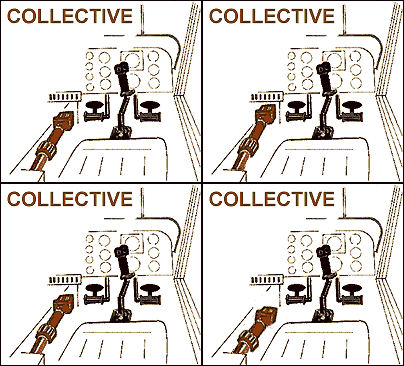
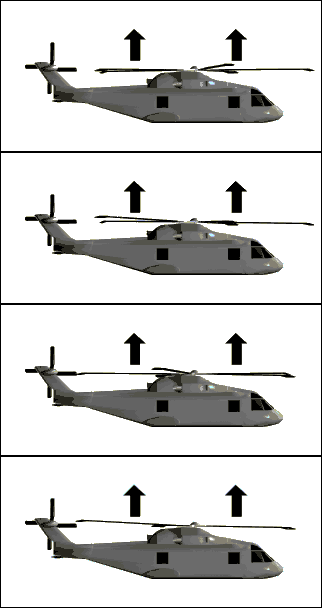
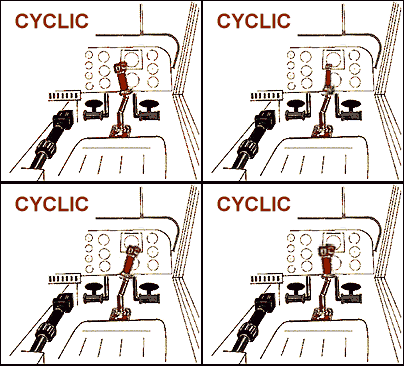
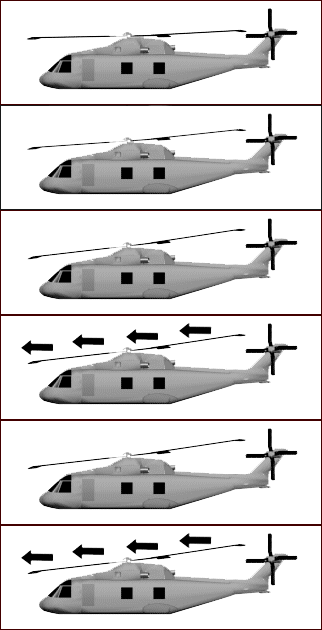
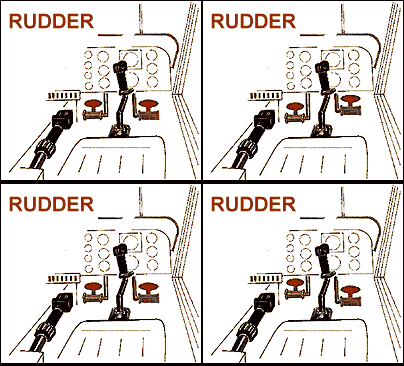
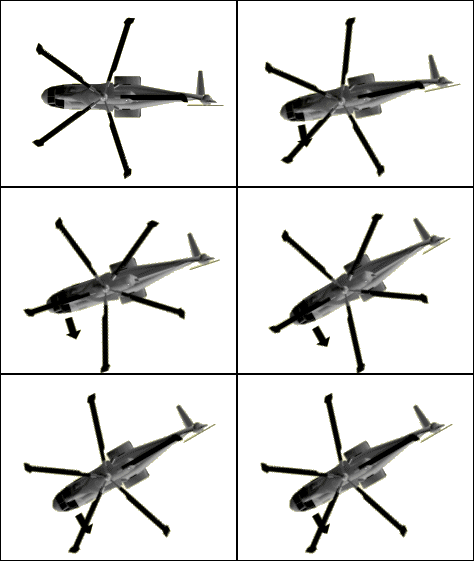
To control a helicopter, one hand grasps a control called the cyclic, which controls the lateral direction of the helicopter (including forward, backward, left and right). The other hand grasps a control called the collective, which controls the up and down motion of the helicopter (and also controls engine speed). The pilot's feet rest on pedals that control the tail rotor, which allows the helicopter to rotate in either direction on its axis. It takes both hands and both feet to fly a helicopter!
我翻一下:
要控制一架直昇機,一手抓住所謂的cyclic控制器,主要用來控制直昇機橫向的方向
(包含前後左右的方向) (chinlin註:它用lateral字眼,中文叫橫向,怎還包含前後左右,應該是針對不同相對角度來說明的吧)
另一隻手要控制所謂的collective控制器,用來控制直昇機升降的動作(當然也控制引擎的速度) (這邊沒提到攻角改變,大家心理明白就可以了)
ps:在RC直昇機,把手當作SERVO來看,就可以融會貫通了
pps:原文後面提到尾舵的部分,那個我就不翻了! |
再補充一下:
Relating the Controls and the Swash Plate:
The collective control raises the entire swash plate assembly as a unit. This has the effect of changing the pitch of both blades simultaneously.
The cyclic control pushes one side of the swash plate assembly upward or downward. This has the effect of changing the pitch of the blades unevenly depending on where they are in the rotation. The result of the cyclic control is that the rotor's wings have a greater angle of attack (and therefore more lift) on one side of the helicopter and a lesser angle of attack (and less lift) on the opposite side. The unbalanced lift causes the helicopter to tip and move laterally.
整理一下後,理解一番後, 這兩個(collective/cyclic)的控制最終到會影響到主旋槳的攻角的改變
collecive控制是全面性的會把整個十字盤往上拉抬,十字盤會牽動相關傳動連結,把所有的主旋槳改變攻角角度.
cyclic控制則是拉抬十字盤的某一個方向(前後左右)來改變某個槳的角度, 使它能夠做出前後左右的樣子
(上面配合所謂的陀螺效應,90度後才反映的地方點,記得上一個遙控飛行技術創刊號有提到,再配合這些資料更加清楚了)
呵呵
有錯幫我更正喔!!
just for reference
| 


 發表於 2005-10-3 16:19


 發表於 2005-10-5 03:05


